Coming soon
Buchla & Tiptop audio 277t - Signal Delay Unit
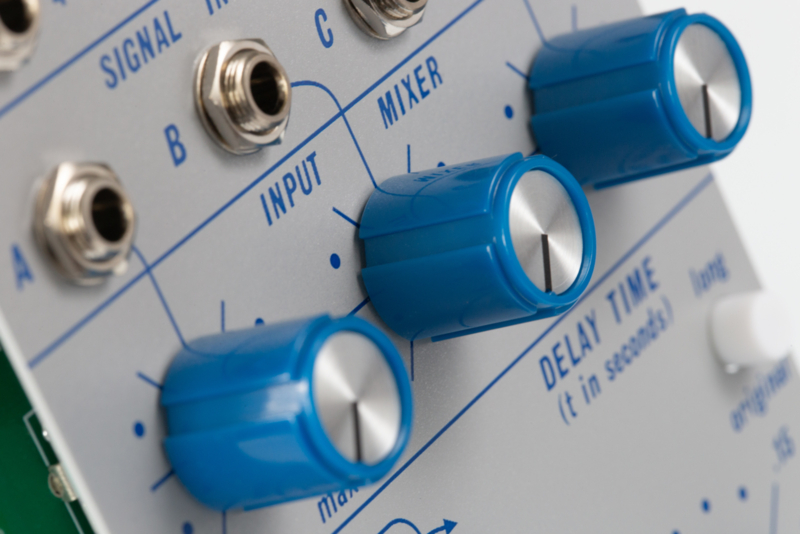
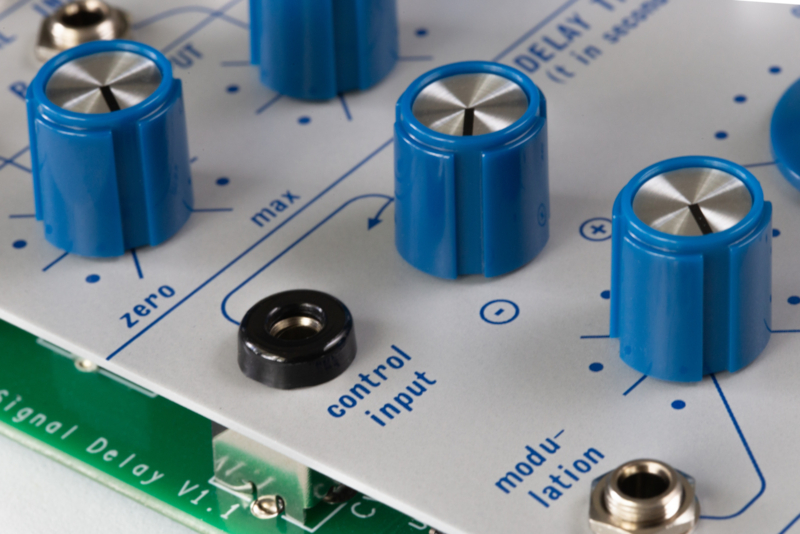
Buchla & Tiptop audio 277t - Signal Delay Unit
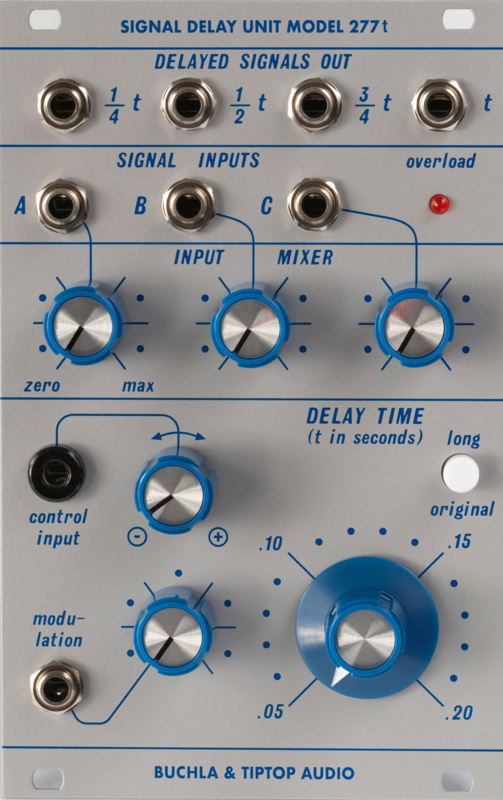
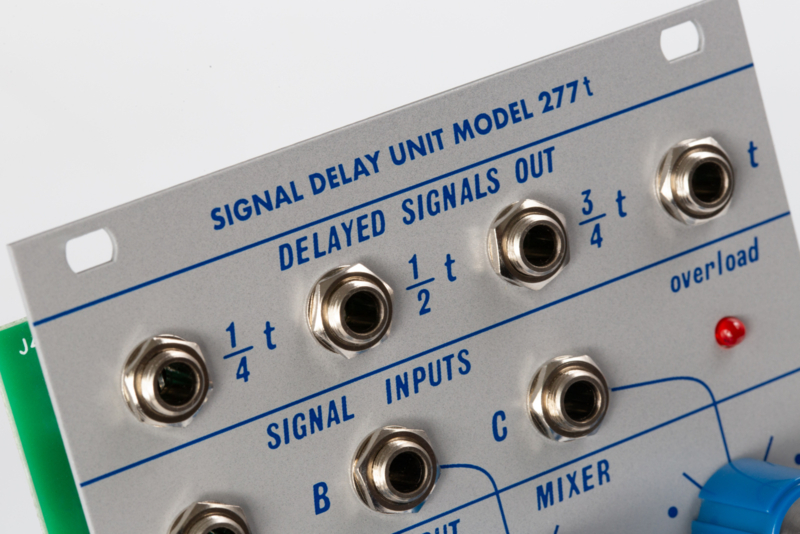
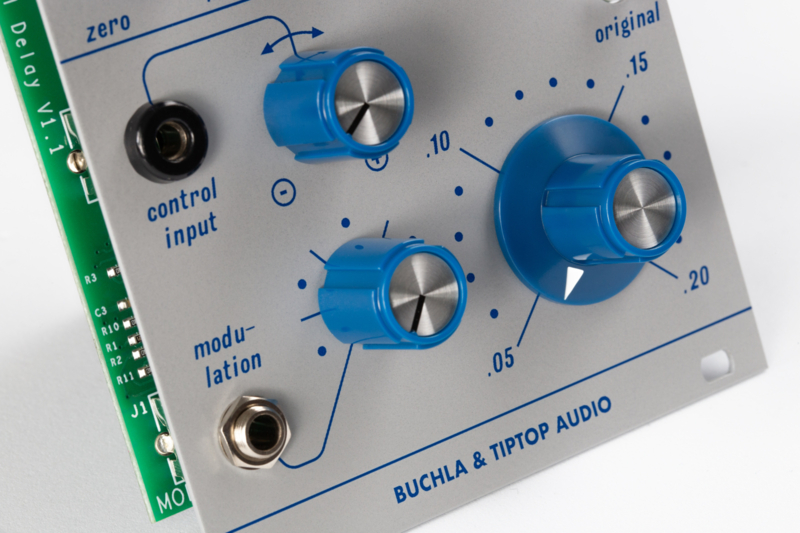
The 277 Signal Delay Unit was invented in 1972 and was one of the first digital delay lines ever made. A delay line passes audio through a series of clocked shift registers, with the clock speed determining the delay time. On its own, this simply delays the audio, but routing signals through dierent paths opens up further possibilities. For example, feeding the output back into the input creates repeating echoes, while placing additional processors in the feedback path allows for more complex eects. Modulating the clock speed can also create pitch-shifting eects. As such, the 277t should be considered, among its other functions, a centerpiece for building eects by patching it with other modules, rather than a modern delay eect module, which typically features a
preconfigured signal path.
In 1972, when tape delays dominated the landscape, Don Buchla was exploring an emerging digital technology for delaying audio. The result was his Model 277. For reasons we still don’t know, it was never completed. Around the same time, Eventide was using similar technology to develop their first digital echo effects and the rest is history. What made the 277 special was Don’s modular approach: it was designed to interact with the other modules in his 200 synthesizer system, opening up possibilities for creatively patched effects that are beyond simple echos.
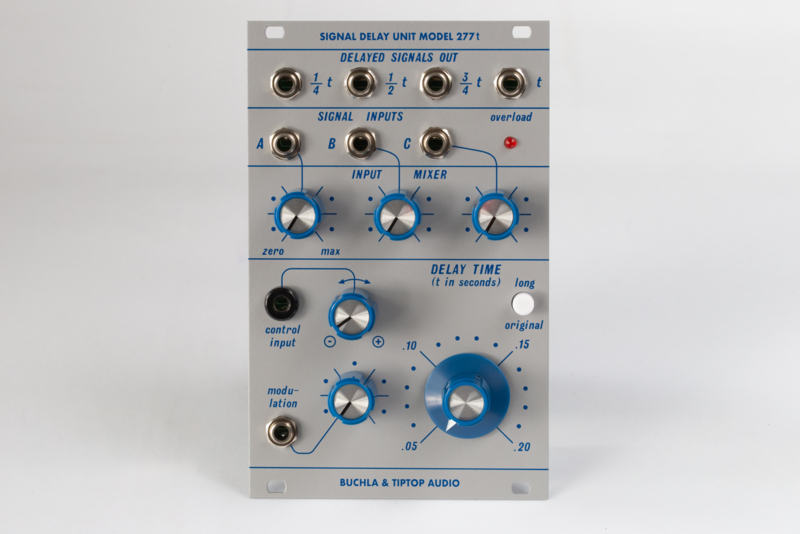
The 277t is not an effect processor, it is a unit designed to patch effects by the user. Although Don never completed the device, he left behind an unfinished schematic. That schematic gave Tiptop Audio a starting point for the 277t Signal Delay Unit, a new version closely based on his original idea.
Specifications:
Size: 16 HP - Depth: 32mm
Power: +12V 112mA / -12V 15mA